Propane Tank & Fuel Handling Policy
What we ship, what you source locally, and how to fuel your fire pit safely.
Several fire pits sold on My Luxe Backyard run on propane. This page explains exactly what ships in your box, why propane cylinders themselves never ship with your order, how to source and connect a compliant tank, and the federal and state rules that govern propane handling across the Continental United States.
A retailer's honest account of how propane fits into what we sell
My Luxe Backyard is owned and operated by Navarro Living LLC. Among the fire pits we sell, several are designed to run on propane rather than natural gas or wood. Propane, also called LP gas, is a compressed, flammable fuel regulated as a hazardous material under federal transportation law, and its safe handling matters more than almost anything else we sell.
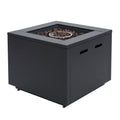
We do not sell, ship, or supply propane cylinders with any order, under any circumstances. This is not a business choice we could change if we wanted to: the U.S. Department of Transportation's hazardous materials regulations prohibit shipping filled propane cylinders through standard parcel carriers like the ones we use. Every propane fire pit we sell ships empty, with the burner, hose, and regulator assembly included, and a compartment built to hold a tank you source locally.
We wrote this page specifically for the products we actually sell, so you know exactly what to expect before you buy and exactly how to source and connect fuel safely once your order arrives.
If you ever smell gas, hear hissing near a connection, or suspect a propane leak, do not attempt to light the fire pit. Shut the tank valve, move the tank away from any ignition source in open air if it's safe to do so, and leave the area. Contact your local fire department or gas utility's emergency line before contacting us.
What the propane terms in this policy actually mean
Propane equipment has its own vocabulary. Here's exactly what each term means when it appears on a product page or in this policy.
LP Gas / Propane Cylinder
A pressurized steel or composite tank holding liquid propane gas. Standard grill-style tanks used with our fire pits are 20-pound (roughly 4.7-gallon) cylinders, sold and exchanged separately from any order placed with us.
OPD Valve
An Overfill Protection Device, a triangular hand-wheel valve required by federal law on all propane cylinders manufactured after 1998. Cylinders without an OPD valve cannot be legally filled or exchanged in the United States.
Regulator & Hose Assembly
The component that reduces high tank pressure to a safe, steady flow for your fire pit's burner. This is included with every propane fire pit we sell and is pre-installed or provided for tool-free connection.
Cylinder Exchange vs. Refill
An exchange swaps your empty tank for a filled one at a retail kiosk. A refill fills your existing tank at a propane dealer or hardware store. Both are widely available nationwide and neither is provided by us.
Exactly what ships with your order, and what you'll need to get locally
This is the single most important thing to understand before buying a propane fire pit from us. Here's the complete, transparent breakdown.
What arrives in your box
- The complete fire pit body, burner assembly, and, where the product includes one, a lava rock or glass media fill.
- The regulator and hose assembly needed to connect a standard OPD-valve propane tank.
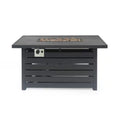
- A built-in tank storage compartment or side cabinet sized for a standard 20-pound cylinder, where the product includes one.
- Full manufacturer assembly instructions and, where applicable, the manufacturer's safety and operating manual.
What you'll need to source locally
- A standard 20-pound (or manufacturer-specified size) propane cylinder with a current OPD valve, purchased or exchanged at any hardware store, grocery store, or gas station kiosk.
- A current tank: cylinders must be requalified or replaced every 12 years under federal Department of Transportation rules, and exchange services handle this automatically.
- Any state or local permit that your municipality requires for outdoor gas appliance installation, if applicable in your area.
Connecting fuel and lighting your fire pit safely, start to finish
Source a compliant tank
Buy or exchange a 20-pound OPD-valve propane cylinder at any hardware store, big-box retailer, or gas station kiosk near you.
Connect on level, outdoor ground
Place the fire pit on a stable, non-combustible surface outdoors, away from structures, railings, and overhanging branches, before connecting the tank.
Leak test before first use
With the tank valve open and burner off, brush a mild soap-and-water solution on every connection point. Growing bubbles mean a leak; tighten the connection and retest before lighting.
Light and monitor per the manual
Follow the manufacturer's exact ignition sequence included with your unit, and never leave an active flame unattended, especially around children, pets, or wind.
Where to keep your tank and fire pit between uses
These general guidelines follow the safety practices recommended by the National Propane Gas Association and most fire pit manufacturers. Always defer to the specific instructions included with your unit.
Outdoors, Always
Never indoors, garages, or enclosed porchesPropane tanks and fire pits are designed for open-air outdoor use only. Never store or use a connected tank in a garage, basement, shed, enclosed porch, or any indoor space, even temporarily.
Upright & Ventilated
Vertical position, never on its sideAlways store and use tanks upright. Keep the built-in storage cabinet's vents unobstructed if your fire pit includes an enclosed tank compartment, so any escaped gas can dissipate safely.
Clearance From Structures
Follow manufacturer-stated minimum distancesKeep the fire pit and tank the manufacturer's stated minimum distance away from your home, fencing, railings, overhead branches, and any combustible surface, and never operate under a closed pergola canopy.
The federal and state law behind this policy
This page reflects real, binding federal transportation and safety law, not a preference of ours. Two bodies of law matter most here.
Federal Hazmat Transportation Law
State & Local Fire Codes
This section is provided for transparency and general information. It is not legal advice, and fire code and permitting requirements vary significantly by state, county, and municipality. If you have questions about how these rules apply to your specific location, we'd encourage you to contact your local fire marshal, building department, or a qualified professional.
What this policy does not cover
This page does not cover natural gas conversion or hard-piped installation, which should only be performed by a licensed gas fitter or plumber under local code. It also does not cover damage or injury resulting from a mismatched, expired, uncertified, or improperly connected tank, or from use of the fire pit in violation of local fire code or manufacturer clearance requirements.
This doesn't reduce your other rights
Nothing here limits your rights under our separate Warranty & Warranty Disclaimer Policy, our Recall Policy & Product Safety Monitoring page, our 30-Day Return & Refund Policy, or your statutory rights under state law, all of which continue to apply alongside this page.
Independent places to learn more about propane safety
These federal, state, and industry resources exist for any consumer, anywhere, and operate independently of My Luxe Backyard. We'd still encourage you to contact us first at support@myluxebackyard.com so we can help directly and quickly.
National Propane Gas Association
Consumer safety guidance on tank handling, storage, and appliance connection.
Visit NPGA's consumer siteU.S. Consumer Product Safety Commission
Report a safety concern with a gas appliance or check for open recalls.
Report or search safety issuesU.S. Department of Transportation, PHMSA
Federal hazardous materials shipping regulations for compressed gas cylinders.
View PHMSA regulationsNew Jersey Division of Consumer Affairs
The state consumer protection office for Navarro Living LLC's registered address, for complaints that can't be resolved with us directly.
Visit the DivisionFiling a report or inquiry with any of these agencies is free, voluntary, and entirely separate from any question or concern you raise with us directly.
Questions about propane setup or safety? Talk to our team
We're available Monday to Friday, 9:00 AM to 5:00 PM Eastern Time. Messages sent outside these hours are answered the next business day. For an active gas emergency, contact your local fire department first.
Navarro Living LLC (Company Registration No. 0451 452883, EIN 42-2132746) is an independent retailer of pergolas, gazebos, patio furniture, fire pits, saunas, and cold plunges, and is not the manufacturer of these products unless specifically stated on a product page. Propane cylinders are never sold, included, or shipped by Navarro Living LLC under any order, promotion, or bundle. My Luxe Backyard currently ships to the Continental United States only and does not ship to Alaska or Hawaii.
This policy was last updated and is effective as of July 1, 2026. It is reviewed regularly and may change as our product range or applicable federal and state regulations change. For details on manufacturer coverage, see our Warranty & Warranty Disclaimer Policy, for returns see our Return & Refund Policy, and for how we collect and use your information, see our Privacy Policy.